
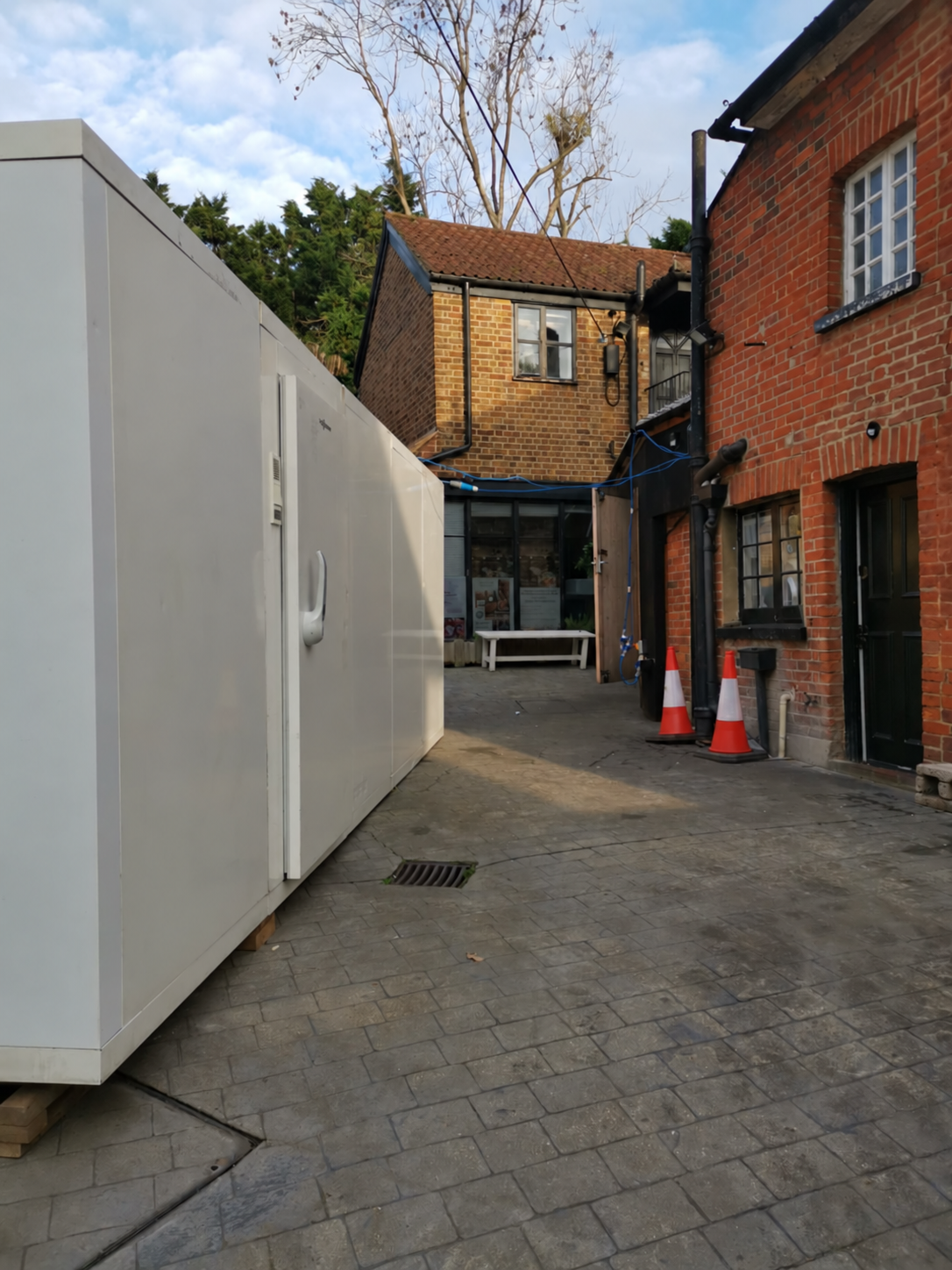
A frosty morning, a chilly yard and a forecast in single figures: it is easy to wonder whether you really need extra refrigeration in winter. For butchers, supermarkets and other food businesses, the answer is simple: if your stock needs chilled storage, it still needs reliable temperature control, whatever the weather is doing.
You may not need an additional cold room if your existing refrigeration comfortably covers demand. But winter weather is not a dependable replacement when your normal storage is full. With Christmas orders, larger deliveries and busy preparation schedules, winter can be exactly when extra space matters most.
Why “cold outside” does not mean safely chilled
The temperature on your phone describes the weather, not the temperature of the products in your yard. A cold morning can become a milder afternoon. Direct sunlight can warm packaging and sheltered corners, while a frost overnight can expose chilled goods to unwanted freezing.
For example, imagine a butcher receiving the next delivery while Christmas orders already fill the existing fridge. Leaving boxes outside because it feels cold creates a storage arrangement that depends on changing conditions. A suitable refrigerated room provides a dedicated space where temperatures can be controlled and checked.
Air temperature and product temperature are also different things. A cold breeze does not prove that every item in a stack has reached its required storage temperature. Check the food itself using the methods in your food safety procedures.
What temperature should chilled food be stored at?
The Food Standards Agency recommends setting fridges at 5°C or below to help keep chilled food within safe limits. Its business guidance states that cold food must be kept at 8°C or below in England, Wales and Northern Ireland. Some products require lower temperatures, so always follow the relevant product instructions and your food safety management procedures.
Check refrigeration temperatures routinely and record checks as required by your procedures. A controller display is useful, but it does not establish the temperature of every product. See the FSA’s guidance on chilling food correctly for more information.
Winter cold room hire for butchers and supermarkets
At VCS, winter brings work supporting butchers and supermarkets that need additional refrigerated capacity. Seasonal trade can mean more stock arriving at once, more orders waiting for collection and less spare room for staff to organise everything.
- Butchers: allow space for incoming deliveries and seasonal orders without overcrowding existing chilled storage.
- Supermarkets: accommodate additional stock during busy trading periods and planned changes to existing refrigeration.
- Caterers and commercial kitchens: keep ingredients organised for Christmas functions and winter events.
Plan around the busiest delivery day, rather than an average week. Include working access and space for air circulation when choosing capacity. Racking can help organise packaged goods; discuss product types and handling requirements with us before booking.
Outdoor storage has more risks than temperature alone
Even when the air feels suitably cold, an open yard is exposed to rain, dirt, animals, pests and unauthorised access. Food storage needs to be suitable for the product, protected from contamination and included in your operating procedures.
A dedicated cold room helps create an organised storage area, but good practice still matters: keep raw and ready-to-eat foods appropriately separated, protect products, maintain cleaning routines and rotate stock by use-by dates. Refrigeration does not replace these controls.
Can a temporary cold room work outdoors in winter?
Yes, with equipment and an installation suitable for the conditions. Tell VCS where the room will stand, what you will store and the required temperature. Low outdoor temperatures can affect refrigeration equipment, so the selected unit must be suitable for the expected ambient conditions. Do not assume any refrigerator will operate correctly in freezing weather.
We assess access, power and positioning as part of planning your installation. Uneven ground does not automatically rule out a room: where suitable, we can use timber packing to provide a level base supported throughout. Site conditions still need to be assessed before the arrangement is confirmed.
- Keep drainage routes and access paths clear.
- Plan lighting and manage ice or slippery surfaces around the doorway.
- Keep external refrigeration ventilation clear of stored goods and obstructions.
- Protect power connections appropriately and keep cables away from traffic and trip hazards.
- Close doors promptly and maintain the equipment’s specified clearances.
Our pre-installation checklist explains what to consider before delivery.
Do frozen products still need a freezer in winter?
Yes. Ordinary winter weather is not a reliable substitute for a freezer. A frosty night does not provide the stable frozen-storage conditions your stock requires, and subsequent warming can cause thawing. Follow the product’s specified frozen-storage temperature and monitor it throughout storage.
Tell us whether you need a fridge, a freezer or both. A storage room should not be treated as a blast chiller or blast freezer: discuss incoming product temperatures and any cooling or freezing process separately before choosing equipment.
A quick winter storage checklist
- How much stock will you hold at the seasonal peak?
- What storage temperatures do those products require?
- Will you need separate chilled and frozen rooms?
- Have you allowed for racking, airflow and staff access?
- Is the proposed location suitable for access, drainage and power?
- Who will check temperatures and respond if a reading is outside your limits?
- Do your hire dates cover deliveries, trading and the final stock clearance?
For loading advice, read how to leave room for airflow. If existing equipment has failed, our commercial fridge breakdown guide explains what to consider next.
Frequently asked questions
Can I use the weather instead of hiring a cold room?
For routine commercial storage, do not rely on the weather as your temperature control. If your existing refrigeration has enough capacity, you may not need extra hire. If it does not, arrange suitable additional storage that supports your food safety procedures.
Should I book extra refrigeration before Christmas?
Discuss your requirements once you know your likely stock volumes and dates. Planning ahead gives time to assess the site, confirm power and choose a workable room layout. Availability and installation dates must be confirmed with the team.
Can I design the room layout before enquiring?
Yes. Use our interactive floor plan to explore a room layout and include your requirements with your enquiry. VCS will review the proposed installation and equipment requirements with you.
Plan your winter cold room hire
Based in Gloucestershire, VCS delivers, installs and collects temporary cold rooms across the UK. Tell us your location, dates, stock requirements and available space so we can discuss a suitable solution for your winter trading.
Design your cold room and request a quoteOr email enquiries@vcs-sw.com.